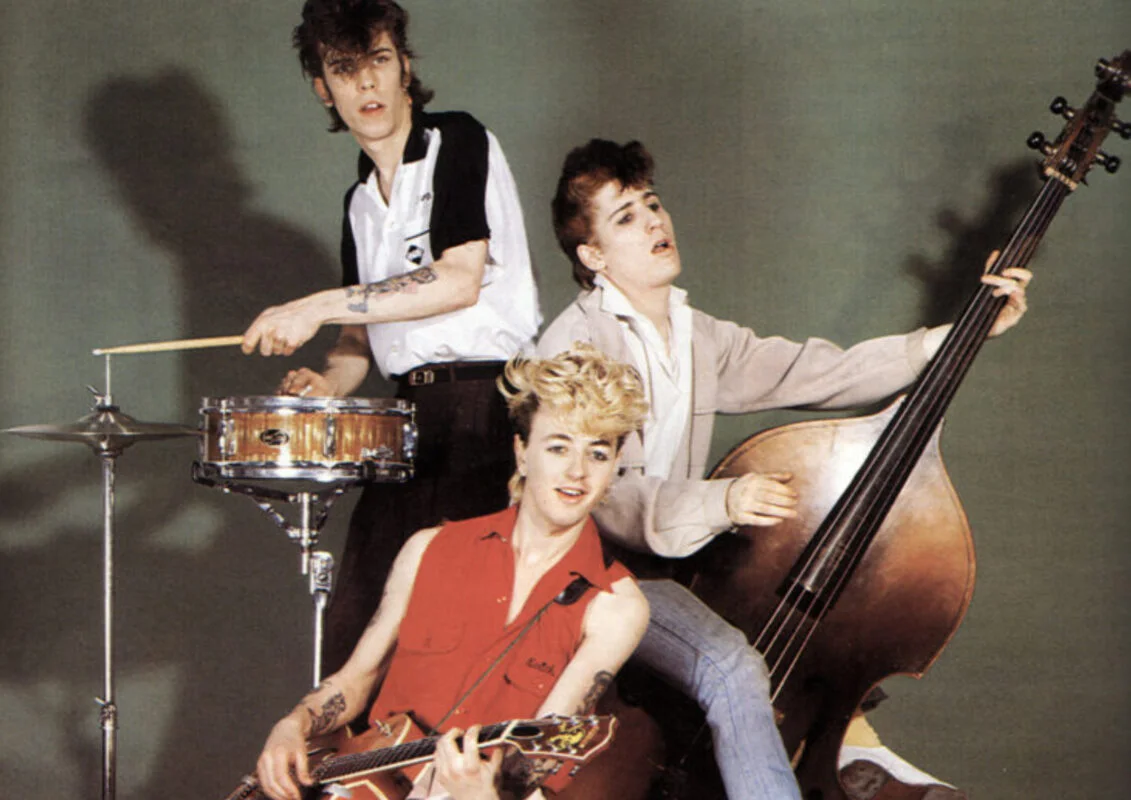
On this date in 1960, the rockabilly world suffered its greatest loss when Eddie Cochran died in a car accident in Chippenham, England, during a UK tour. Gene Vincent was also in the car but survived. This event is often cited as the symbolic end of the “First Wave” of rockabilly.
Eddie Cochran is regarded as a founding figure in the rockabilly genre, having served as both a technical innovator and a cultural catalyst during the music’s first wave. Emerging in the mid-1950s, Cochran distinguished himself through a rare combination of songwriting prowess, vocal charisma, and a sophisticated understanding of studio production. His work bridged the gap between the rural sounds of early country-rock and the aggressive, guitar-driven energy that would eventually define the rock and roll era.
As a guitarist, Cochran was a visionary who redefined the instrument’s role in the band. Perhaps his most significant technical contribution was the use of an unwound third string, which allowed him to execute the expressive note-bending that became a staple of rock guitar. This innovation directly influenced the lead guitar styles of the 1960s and beyond.
Cochran’s influence extended deep into the recording studio, where he operated with a “do-it-yourself” ethos far ahead of his time. He was an early adopter of overdubbing and multi-track recording, often playing multiple instruments and singing layered vocal parts on his own tracks. Hits like “Summertime Blues” demonstrated his ability to capture the specific frustrations of teenage life, utilizing heavy acoustic rhythms and percussive “slap” sounds that provided a blueprint for the rockabilly aesthetic.

Cochran’s legacy remains a cornerstone of the rockabilly scene. His technical modifications and aggressive playing style were meticulously studied by later revivalists, most notably Brian Setzer of the Stray Cats. Even his fashion—the leather jackets and pompadour—set a visual standard for the subculture. By combining instrumental innovation with a rebellious teenage narrative, Cochran ensured that his influence would resonate through rock, punk, and the enduring rockabilly community.
💧 You might also like CRY-BABY: DOIN’ TIME FOR BEING YOUNG.